
Parsippany Elite Roofing provides storm damage roof repair in Parsippany, NJ and has worked on roofs across the area for more than 20 years, serving surrounding cities including Hanover, East Hanover, Denville, Florham Park and West Caldwell. Thunderstorms, nor’easters and the occasional tropical system all bring wind, hail and falling limbs to this part of New Jersey. Some damage is obvious the next morning, and some does not show until the next heavy rain.
Our role after a storm is to find what was damaged, document it clearly and repair it properly. We inspect from the roof and the attic, photograph every finding, and write an itemized scope that describes the repair. If you decide to file an insurance claim, that record is yours to use.
When a storm leaves the house open to weather, the first step is a same-day tarp or temporary repair. The inspection, documentation and permanent repair then follow once the house is protected and the weather clears.
Types of Storm Damage We Repair
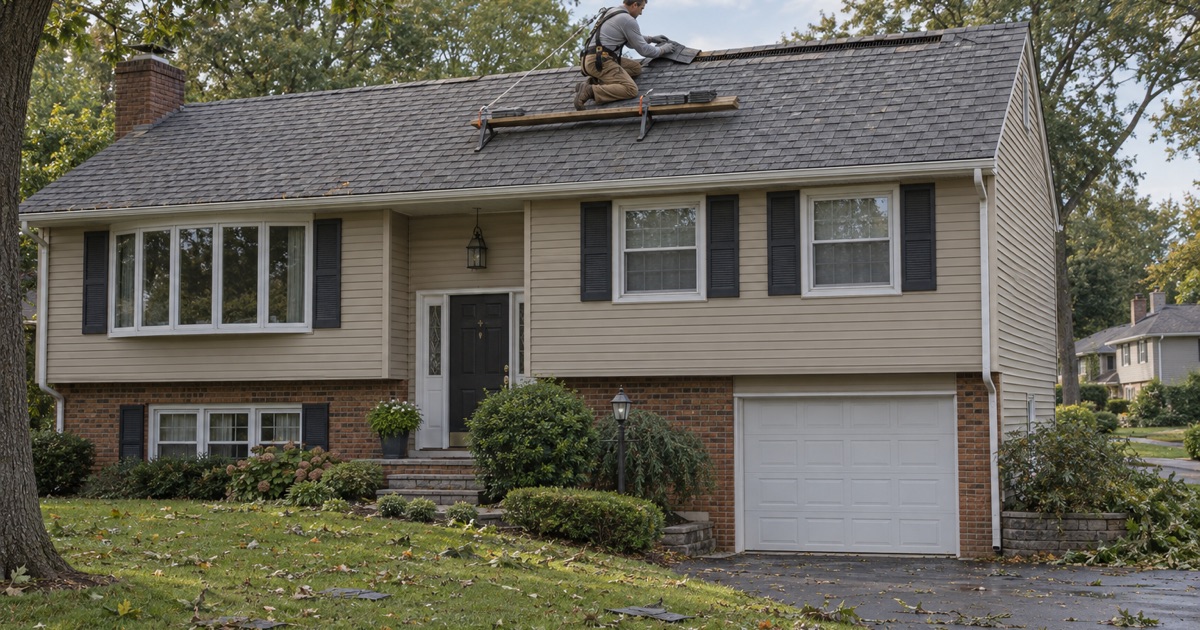
Wind Damage to Shingles
Wind damage usually starts at the edges of a roof: the rakes, the ridge and the eaves. Gusts break the adhesive seal between shingles, then lift and crease them, and stronger gusts tear them away. A creased shingle may lie back down and look fine from the ground while no longer sealing.
We check seals across the roof, not just where shingles are missing. Lifted or creased shingles are replaced along with the missing ones. Where wind damage keeps recurring along one edge, we check the starter course and drip edge as well.
Hail Damage
Hail bruises asphalt shingles, crushing the mat under the granules and knocking granules loose. The damage may not leak right away, but the bruised spots wear through faster than the rest of the roof. Soft metal on the roof, such as vents, flashing and gutters, often shows dents that confirm hail.
We inspect each slope for bruising, granule loss and fractured shingles, and we photograph the dented metal. Hail damage is usually spread across a slope rather than in one spot. Our report describes the pattern so the extent is clear.
Fallen Trees and Limbs
Mature trees are common on lots across Morris County, and storms regularly bring limbs down onto roofs. A falling limb can puncture decking, crack rafters and tear out flashing and gutters. Even smaller branches can scrape away granules and break shingle seals.
Once the weight is safely removed, we inspect the roof surface and the framing from the attic. Cracked rafters or trusses may need structural repair before the roof is rebuilt. Each step is photographed for your records.
Gutter, Flashing and Vent Damage
Storms do not only damage shingles. Gutters bend or pull away under wind, ice and falling debris. Flashing at chimneys and walls can be peeled back, and roof vents can crack or blow off.
We inspect all of these parts during a storm damage visit. Each damaged item appears as a separate line in the scope. That gives you and your insurer a complete picture of what needs repair.
Documenting Storm Damage
Photos and Written Findings
We photograph the damage on every slope, at every penetration and inside the attic. Photos are taken before anything is moved or repaired, so they show conditions as the storm left them. Each finding is described in plain language in a written report.
The report also notes pre-existing conditions we see, such as old wear or prior repairs. Being accurate about what the storm did, and what it did not do, keeps the record credible. That accuracy matters when your claim is reviewed.
Meeting the Adjuster
When you ask, we meet your insurance adjuster on site and walk through what we found. We point out the damage, share our photos and answer questions about the repair. The adjuster makes the coverage decision, and the claim remains yours.
We do not negotiate claims on your behalf. In New Jersey, that role belongs to public adjusters licensed under the Public Adjusters’ Licensing Act. Our job is to give clear evidence and a fair repair scope.
Reading Your Policy
Policies vary widely in what they cover and how deductibles apply. Some New Jersey policies include a separate hurricane deductible triggered by defined storm conditions, as described in state guidance including Department of Banking and Insurance Bulletin 11-16. The department also publishes general guidance for homeowners filing storm claims.
We suggest reading your declarations page and the department’s guidance before speaking with your insurer. Knowing your deductible and coverage helps you decide whether a claim makes sense. We can then price the repair either way.
Repairing the Damage
Matching and Integrating New Materials
Storm repairs need to blend into the existing roof both in appearance and in how they shed water. We match shingle brand, style and color as closely as possible and weave new shingles into the surrounding courses. Flashing, boots and vents are replaced with new parts rather than straightened and reused.
If the damage covers most of a slope or the whole roof, replacing that section or the entire roof may be the right answer. We explain when that is the case and why. The decision is yours, informed by our findings.
Stronger Materials for the Next Storm
When a roof is repaired or replaced after storm damage, it may make sense to upgrade. Shingles rated for high wind under ASTM D3161 Class F or ASTM D7158 Class H resist uplift better. Impact-resistant shingles tested under UL 2218 Class 4 hold up better to hail.
These upgrades can cost more up front, and some insurers offer premium credits for impact-rated roofs. We explain the options and their costs. You decide whether they make sense for your home.
- 20+ Years on Local Roofs
- Itemized Written Scopes
- Same-Day Storm Tarping