
Leaks Traced From the Attic
Every leak call includes a look in the attic as well as on the roof, so the water is traced to where it really gets in rather than patched above whatever ceiling stain happens to show it.
Repairs, replacements and storm work for Morris County homes and buildings, with every leak traced to its source before anything is priced.
Parsippany Elite Roofing has spent more than 20 years on roofs in Parsippany, NJ, handling roof repair, roof replacement, leak tracing, gutters, chimney flashing and storm damage for homes and small commercial buildings. Our work starts with the question most homeowners actually have: what is wrong with the roof, and does it need a repair or a new one? We answer that with photos from the roof and the attic before anything is priced.
Parsippany-Troy Hills covers a wide mix of houses, from ranches and split-levels built after the war to lakeside cottages in Lake Hiawatha and Lake Parsippany that became year-round homes, garden-apartment complexes and townhouse communities. Each of those roofs has its own weak points. Our scopes are written for the house in front of us rather than copied from the last job.
Every estimate lists the work line by line, every leak is traced from inside the attic as well as on the roof, and every repair or replacement ends with a cleaned yard and a magnet sweep for nails. That is the standard for each roof we touch.
What we do
Roofing in Parsippany, NJ, traced from the attic up
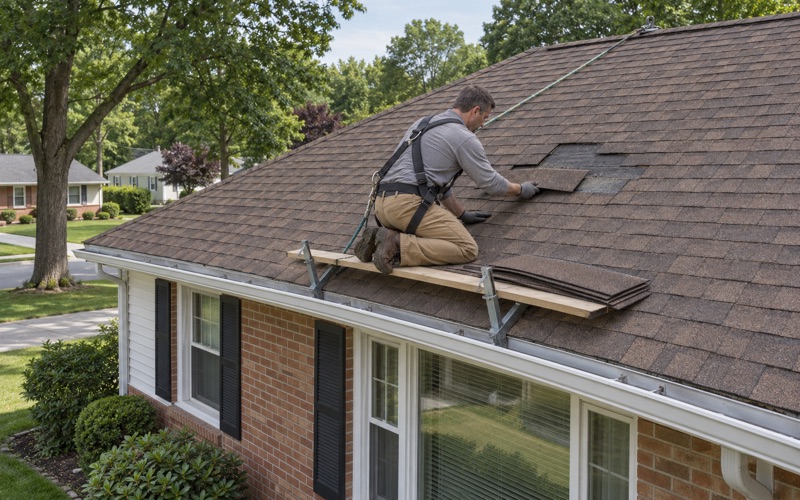
Shingle, flashing, vent and valley repairs traced from the attic first, with a clear answer on whether the roof still has years left in it.
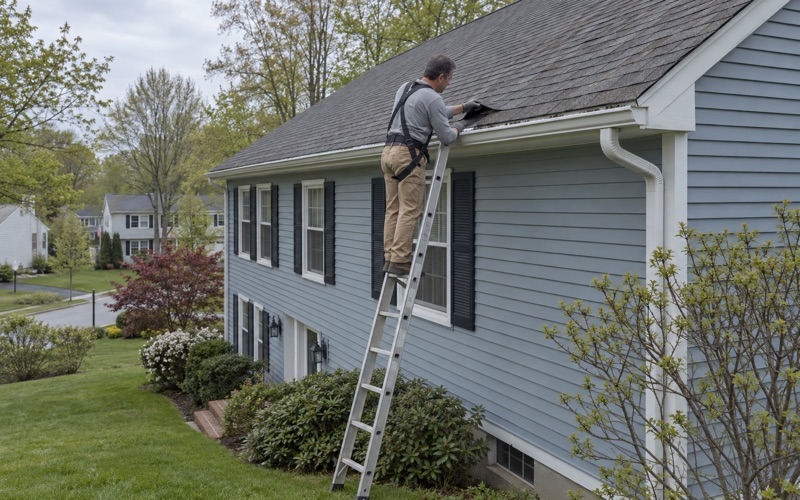
A roof and attic inspection with photos and a written condition report, for owners planning ahead, sellers and buyers.
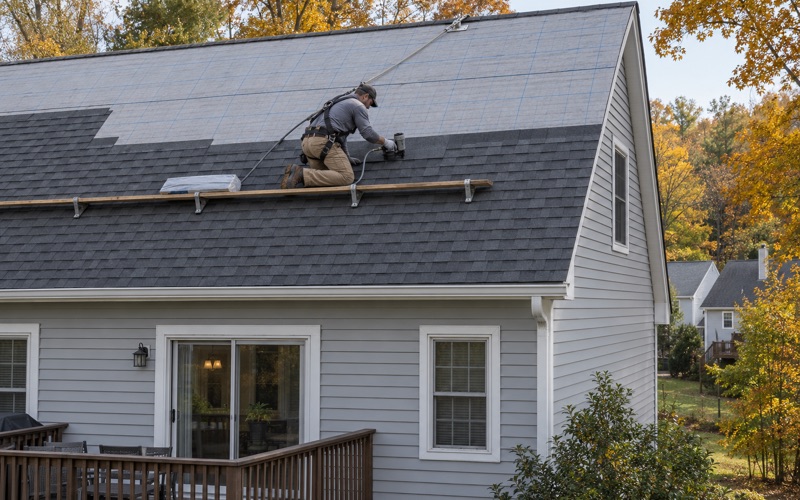
Full tear-off roof replacement with new flashing, ice barrier at the eaves, balanced ventilation and an itemized scope you can compare.
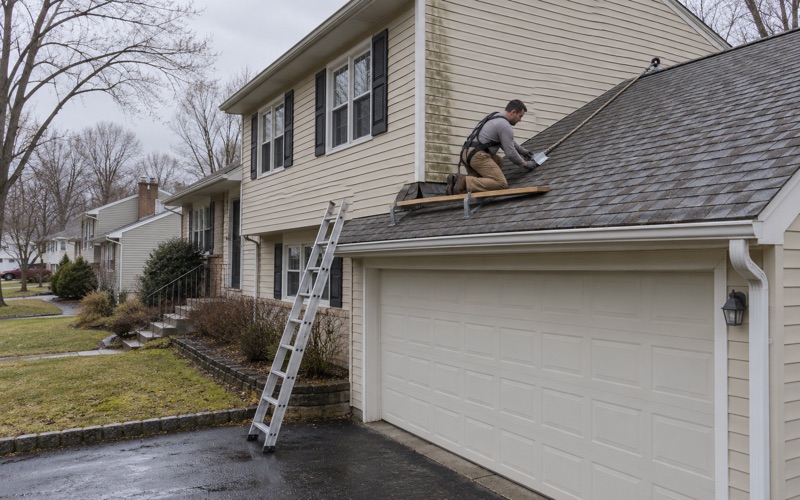
Leak tracing from the attic and the roof, then a focused repair at the true entry point, whether it is flashing, a boot, a valley or an ice dam.
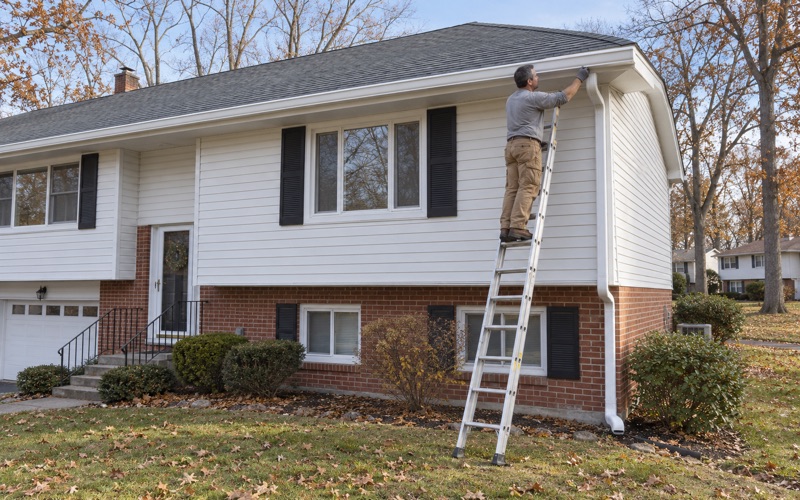
Seamless aluminum gutters and leaders formed on site, sized to the roof, pitched to drain, and discharged away from the foundation.
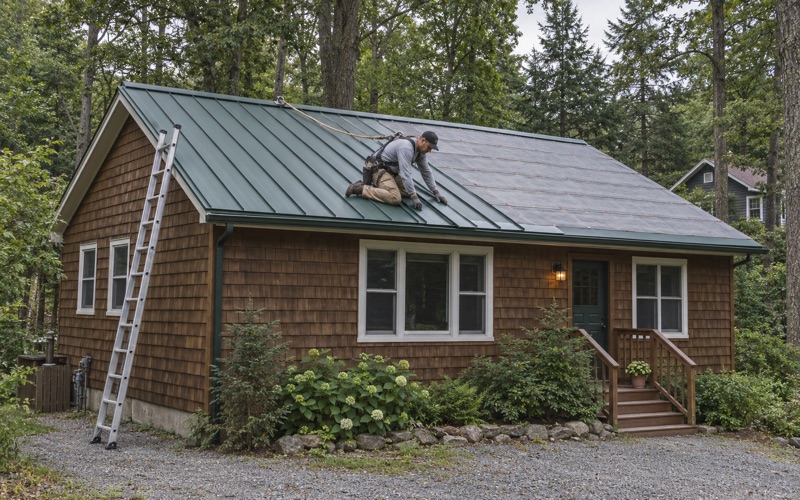
Standing seam and other metal roofs for homes, porches and additions, with snow, ice and expansion planned into every detail.
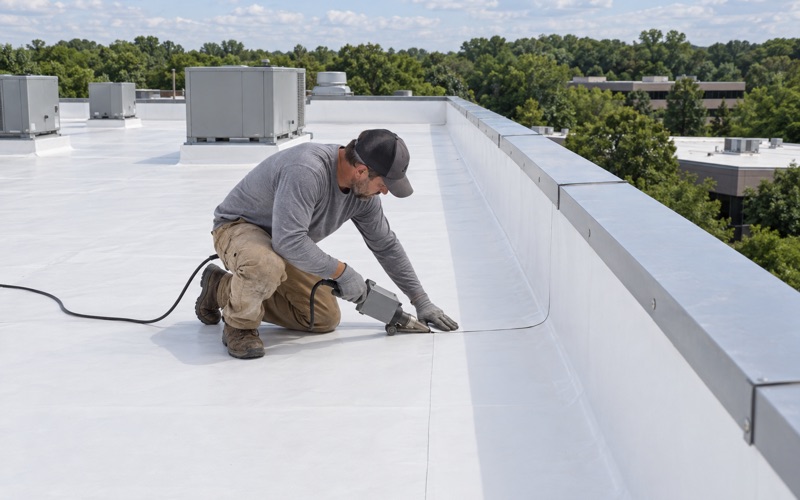
Repair, recover and replacement of low-slope membrane roofs on offices, storefronts, mixed-use and multifamily buildings.
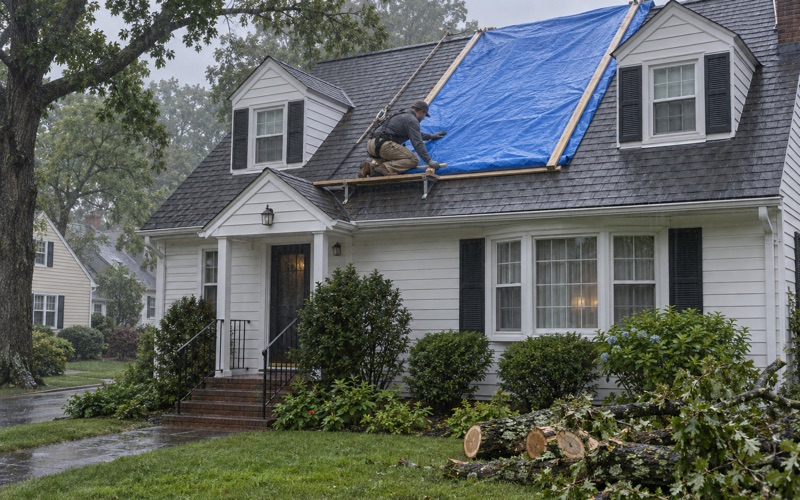
Same-day tarping and temporary repairs after storms and fallen limbs, documented with photos, followed by a lasting permanent repair.
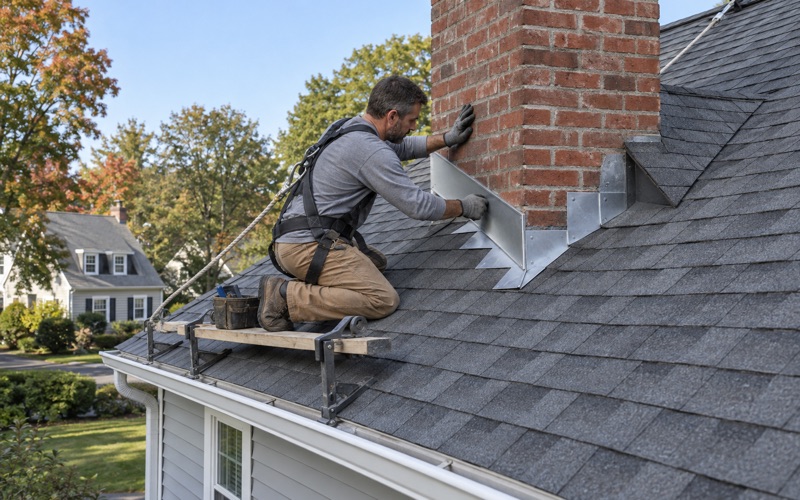
Chimney flashing, crickets, crowns, caps and repointing that stop water where the masonry meets the roof.
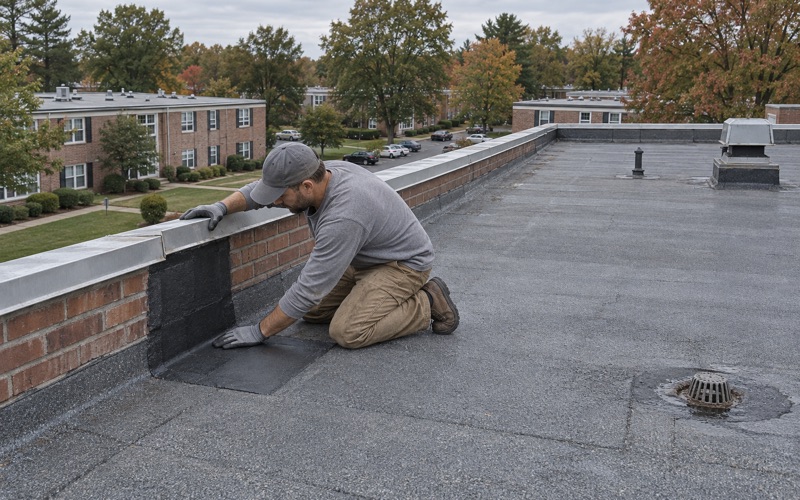
Repairs to EPDM, modified bitumen, TPO and rolled roofing on porches, additions, garages and small buildings, from seams to drainage.
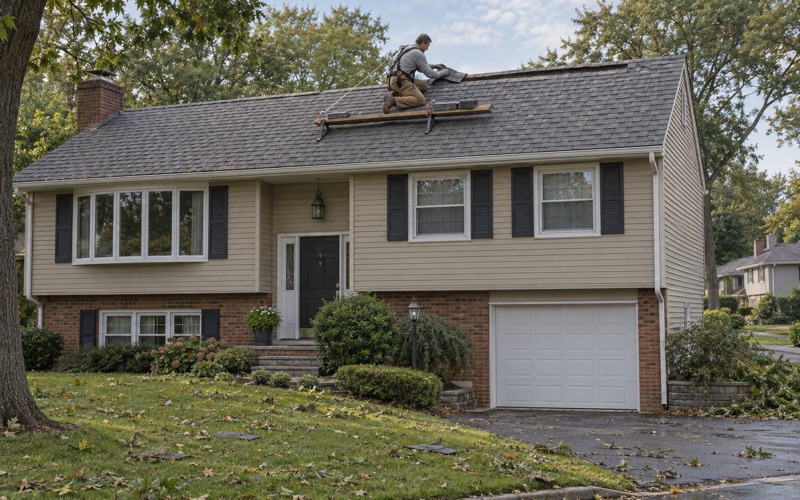
Inspection, documentation and repair of wind, hail and tree damage, with photos and an itemized scope for your own insurance claim.
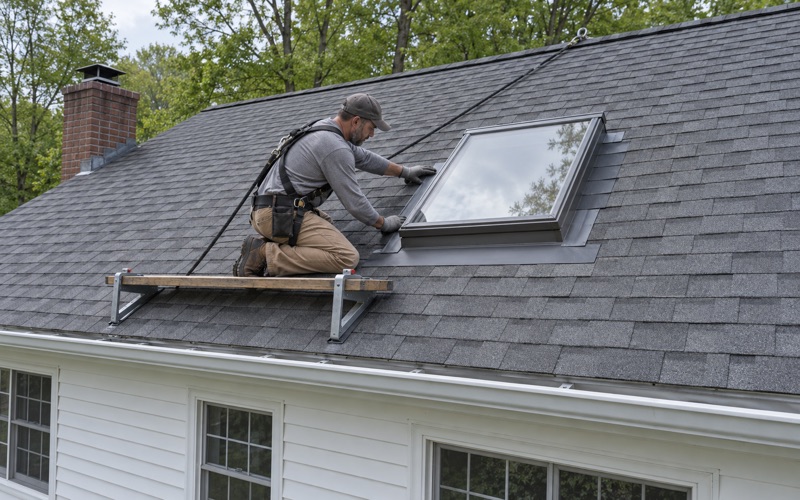
New and replacement skylights, curb-mounted or deck-mounted, flashed into the roof so they bring in light without bringing in water.
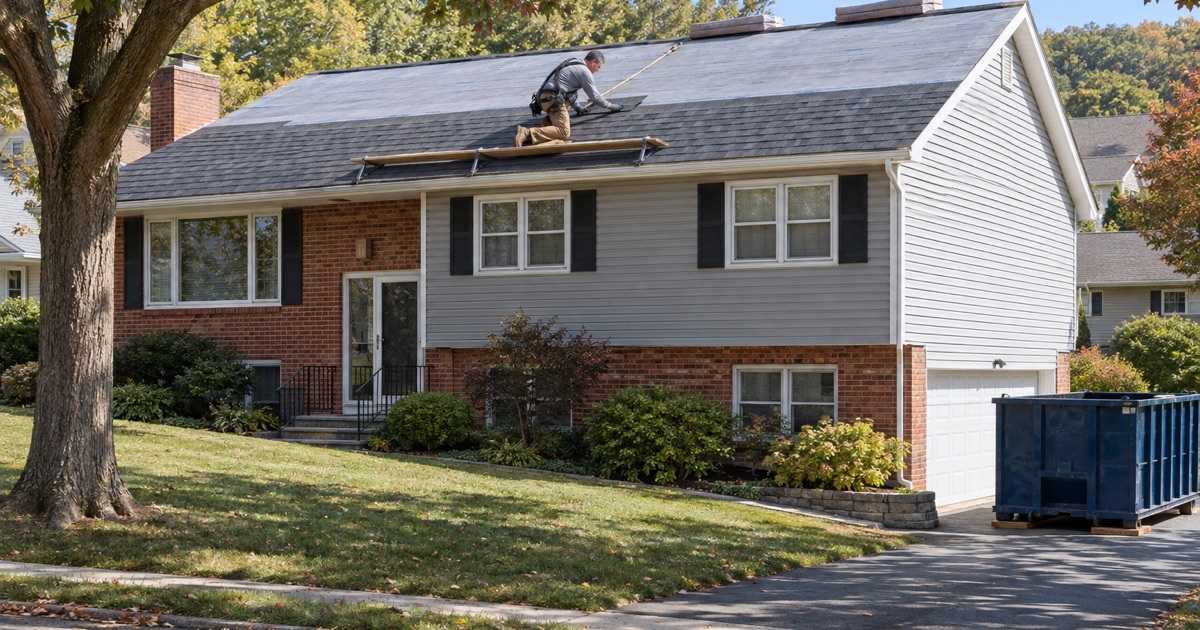
Parsippany Elite Roofing has more than 20 years of roofing experience in this part of Morris County. That time on local roofs means we know how the older capes ice up, where lakeside cottages hide their framing problems, and how wooded lots load valleys with leaves. It shows up in the details of each scope we write.
Every leak call includes a look in the attic as well as on the roof, so the water is traced to where it really gets in rather than patched above whatever ceiling stain happens to show it.
No replacement is quoted until we have said plainly whether the roof can be repaired, so an owner with years left on the shingles keeps them rather than being sold a roof they do not need yet.
Tear-off, decking, underlayment, flashing, ventilation and gutters each get their own line, so two roofing estimates can be compared item by item rather than guessing what a single lump sum covers.
Ice-dam-prone eaves on the area’s older capes and split-levels get a self-adhering eave membrane and a ventilation check, so meltwater has nowhere to back up rather than just getting new shingles over the same cold overhang.
In Parsippany’s townhouse and condominium communities, who holds the roof is confirmed against the association’s documents before an estimate is written, so owners are not billed for a roof the board is responsible for.
Overhanging limbs, leaf-packed valleys and shaded, mossy slopes around the lakes and wooded streets are called out in the estimate, so those conditions are handled in the scope rather than discovered halfway through the job.
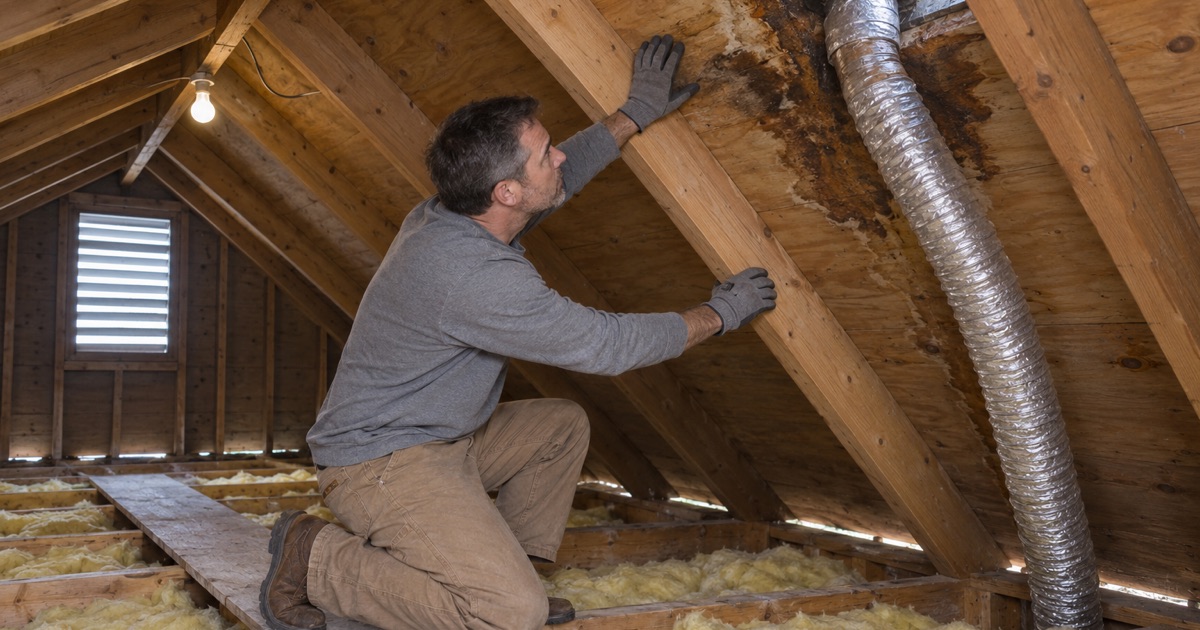
Not every wet ceiling has a roof leak above it. A failed bathroom fan duct, a leaking vent pipe or condensation in a poorly ventilated attic can all look the same from below. We check the attic and the roof together so you only pay to fix the actual source.
A ceiling stain is where water finally dripped, not usually where it entered. Water runs along rafters and sheathing before it falls. We trace stains back through the attic to the opening, which is why our repairs tend to stay dry.
Chimney flashing, cracked rubber pipe boots and aging skylight flashing cause many of the leaks we see. We replace the failed part with new flashing or boots lapped under the shingles, not a bead of caulk. Chimneys wider than 30 inches also get a cricket if they lack one.
Where a dormer wall or second roof meets the main roof, step flashing should be woven through every shingle course. Missing kick-out flashing at the bottom sends water into the wall. We rebuild those joints so water stays on the roof and in the gutter.
In winter, attic heat melts snow that refreezes at the cold eave and backs water up under the shingles. We repair the damaged eave with self-adhering ice and water barrier and check the insulation and ventilation that caused the melt. Treating both is what stops the leak returning.
Water that runs behind a gutter usually means a missing drip edge or a gutter hung too low. It rots fascia and soaks soffits. We correct the drip edge and gutter position so water lands in the trough instead of the wall.
When wind or a falling limb opens the roof, we put tarps and temporary repairs on the same day whenever conditions allow. Photos are taken before anything is moved. The permanent repair follows once the house is dry and the damage is fully understood.
A single failed boot or flashing joint on a sound roof calls for a repair. Brittle shingles, widespread granule loss and leaks in several places point toward replacement. We show you the evidence and give a straight answer before discussing either price.
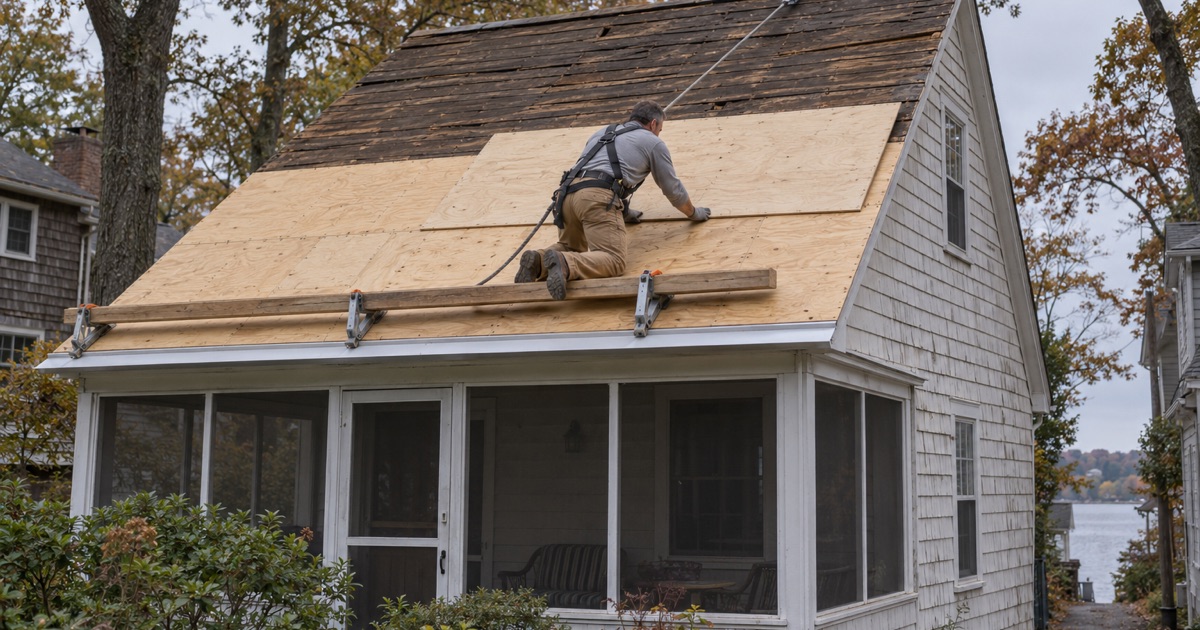
A replacement starts with the dumpster and ground protection, then the old roof comes off down to the deck. We repair the decking, install underlayment, ice barrier, flashing, shingles and ventilation, and close the roof each night. The job ends with a magnetic sweep of the yard and driveway.
New Jersey’s rehabilitation subcode requires a tear-off when a roof already has two or more layers, or when the existing covering is slate, wood shake or tile. Extra layers add weight and hide damaged decking. We remove everything so the new roof starts on a sound deck.
On a detached one- or two-family house, replacing roof covering is ordinary maintenance under New Jersey Administrative Code 5:23-2.7, so a permit is not normally needed. Structural work, attached townhouses and multifamily buildings follow different rules. We confirm the requirement for your property before work starts.
Much of Parsippany’s housing went up in the decades after the war, and many of those roofs are on their second or third covering. Original plank or plywood decking, undersized vents and older chimney flashing are common. Our scopes plan for those conditions instead of treating them as surprises.
Lake Hiawatha developed as a summer community and became year-round living, and Lake Parsippany followed a similar path. Converted cottages often have shallow rafters, additions at mixed heights and low-slope sections. We check framing and transitions closely before writing the scope.
In garden-apartment complexes and condominiums, the roof usually belongs to the association or the landlord rather than the unit owner. We confirm who holds the roof from the governing documents before quoting. For boards, we provide condition reports that support reserve planning.
Attached roofs share ridges, valleys and firewalls with neighbors, so who signs the contract and how the shared joints are handled matter. We check the association’s rules, coordinate with neighbors where needed and flash shared lines so one owner’s new roof does not leak into the next unit.
A shingle color should work with the siding, brick, trim and style of the house. Darker shingles suit many colonials, while lighter tones can brighten a ranch. We bring full-size samples so you can see them outside against the house rather than on a small chip.
A roof that cannot breathe ages from underneath. We check every replacement for soffit intake and ridge exhaust, clear blocked soffits and balance the two. Good ventilation reduces ice dams, summer heat and condensation, and it protects the shingle warranty.
Solar panels have to come off before the roof below can be replaced. We schedule removal and reinstallation with the solar company as part of the plan. Racking penetrations are flashed into the new roof so they stay dry for its whole life.
When a house is being sold, we provide a written roof condition report the seller can hand to the buyer’s inspector. It describes age, condition and any recommended repairs. That clear record often prevents last-minute price negotiations over a vague inspection note.
Quotes differ because they include different things: tear-off, decking allowances, underlayment type, flashing replacement, ventilation and gutters. A lower number often leaves something out. Our itemized scopes make it easy to compare line by line and see where the difference really is.
Three-tab shingles are flat and thin, while architectural shingles are thicker and dimensional. Designer shingles imitate slate or shake, and impact-rated shingles tested to UL 2218 Class 4 resist hail. We install GAF Timberline HDZ, Owens Corning Duration and CertainTeed Landmark, among others.
Shingles are rated for wind under ASTM D3161 Class F or ASTM D7158 Class H, but the rating depends on correct nailing. Nails placed outside the manufacturer’s nail zone can let shingles blow off long before their rating. Our crews nail within the zone on every course.
Older colonials and Victorians in the area sometimes still carry natural slate. Slate can last for generations, but broken pieces, failed fasteners and worn flashing let water in. We replace individual slates and rebuild flashing, and we tell you honestly when the roof needs more.
Standing seam metal roofs use concealed fasteners and interlocking seams for a long service life. Many owners also choose metal for porch roofs and bay windows below a shingle roof. We flash those transitions so water from the main roof runs onto the metal and away.
Cedar shake gives a natural look but needs care and ventilation to avoid rot. Synthetic slate-look shingles give the appearance of slate without the weight. We explain the maintenance, cost and look of each so you can choose with confidence.
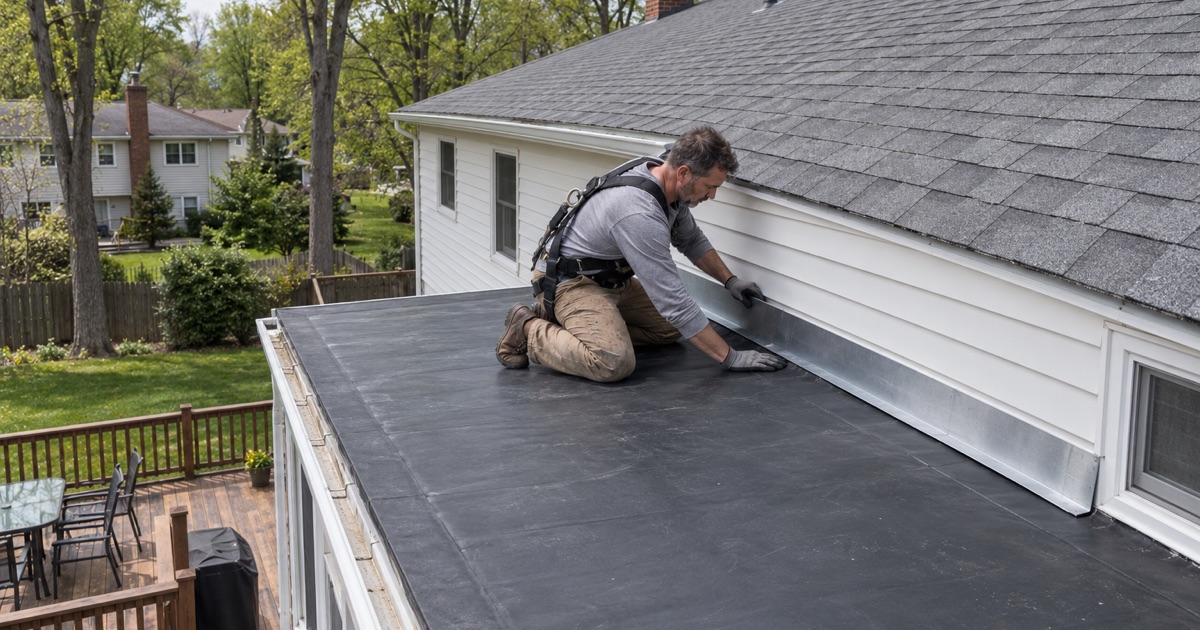
Low-slope roofs over porches, additions and garages use different materials from shingles. Torch-down SBS or APP modified bitumen handles foot traffic well, EPDM rubber stays flexible in cold weather, and TPO is heat-welded and reflective. We recommend the one that suits the roof’s use.
The offices, shops and mixed-use buildings along Route 46 often have low-slope membrane roofs. We repair seams, flashing and drains, and replace failed membranes with TPO, PVC, EPDM or modified bitumen. Work is scheduled around business hours where possible.
Mature trees shade roofs, drop leaves into valleys and grow moss on damp slopes. Overhanging limbs scrape shingles and fall in storms. We call these conditions out in the estimate and plan valley details and gutter sizing to handle the debris.
Coatings can extend the life of some low-slope membranes when applied to a sound, dry roof. Rejuvenation sprays on asphalt shingles are less proven and cannot fix cracked or brittle shingles. We tell you plainly whether a coating will help or just delay a needed repair.
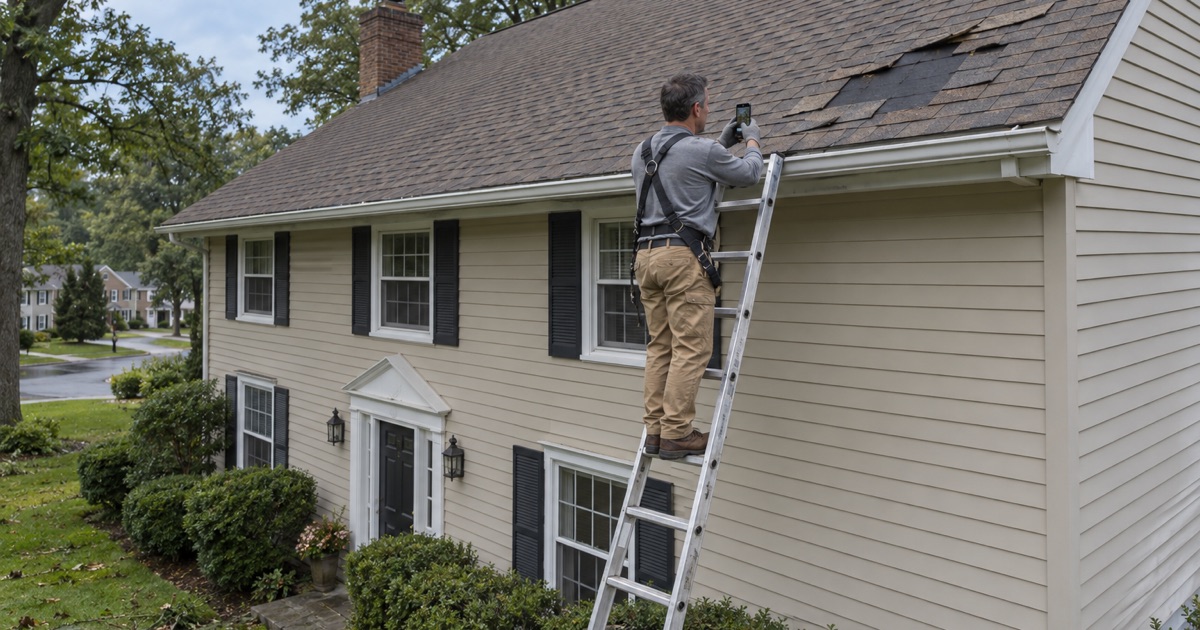
After a storm, take photos of the damage, keep receipts for any emergency work and arrange temporary repairs to prevent more damage. We tarp the same day when possible and photograph everything before it is moved. That record supports your own claim.
In the first hour, get everyone away from the affected rooms, stay clear of downed wires and call the utility if lines are involved. Do not try to remove the tree yourself. Once a tree service clears the weight, we cover the opening and assess the framing.
You report the damage to your insurer, an adjuster inspects, and the policy decides what is paid. We provide photos, written findings and an itemized repair scope, and meet the adjuster on site when asked. The Department of Banking and Insurance publishes guidance for homeowners filing storm claims.
Policies generally cover sudden damage from wind, hail or falling trees, not gradual wear. Claims are often denied when damage looks like age rather than a storm. Our reports separate the two clearly, which keeps the record credible.
In New Jersey, only public adjusters licensed under the Public Adjusters’ Licensing Act may negotiate a claim on a homeowner’s behalf. Roofing contractors may not. We document the damage and price the repair, and the claim remains yours.
In New Jersey, a new roof can qualify as an exempt capital improvement documented with Form ST-8, while repairs are generally taxable. The distinction matters on larger jobs. We note on the contract which category the work falls into.
Roof size, pitch, number of layers, decking condition, material choice, chimneys, skylights and access all affect price. Our written scope shows each of those so you can see what drives the total. Decking is priced per sheet in the contract.
Some insurers limit coverage or pay depreciated value on older roofs, and others may require an inspection before renewing. The details depend on your policy. A current condition report from us helps you answer the insurer’s questions with facts.
The rule that a roof must be fully replaced when more than a quarter is damaged comes from Florida’s building code. New Jersey has no equivalent rule. Here, repair or replacement depends on the roof’s condition and your policy, not a fixed percentage.
New Jersey does not issue a separate roofing license. Home improvement contractors register under the Contractors’ Business Registration Act, and the registration number should appear on contracts. Ask any roofer for that number and check it with the state.
If a roofer is hurt on your property without proper coverage, questions of liability can follow. New Jersey contractors are expected to carry workers’ compensation insurance. Ask any roofer for current certificates of workers’ compensation and liability insurance before work begins.
Parsippany Elite Roofing provides roofing throughout the greater Parsippany area, with the same crews and the same standards on every job.
Good to know
Yes. Every estimate is a written scope that lists tear-off, decking, underlayment, flashing, ventilation and gutters as separate lines. That lets you compare our price with another company's item by item. Decking replacement is priced per sheet in advance, so hidden damage does not become a surprise charge.
Most homes in the area are torn off and reroofed in one to three working days. Larger roofs, steep pitches, several layers or extensive decking repairs can add time. We schedule around the forecast and close the roof up at the end of every working day.
Home improvement contractors in New Jersey register with the state under the Contractors' Business Registration Act, and the registration number belongs on contracts and advertising. Before signing with any roofer, ask for that number and check it with the state. Our contracts follow the state's home improvement rules, including the three-day cancellation notice.
We install architectural shingles from the major manufacturers, including GAF Timberline HDZ, Owens Corning Duration and CertainTeed Landmark. Impact-rated shingles tested to UL 2218 Class 4 and high-wind rated products are available. We also install standing seam metal, slate-look shingles and low-slope membranes.
We do both, and we tell you which one the roof actually needs. A roof with useful life left gets a repair quote, not a replacement pitch. When repairs would only buy a few months, we explain why with photos from the roof and the attic.
Yes. Panels have to come off before the roof underneath can be replaced, so we schedule removal and reinstallation with the solar company before the start date. The racking penetrations are flashed as part of the new roof.
We watch the forecast closely and do not open more roof than we can close the same day. If weather changes unexpectedly, the crew covers exposed areas with underlayment and tarps. The house stays dry while the work is paused.
Yes, every day. Gutters, yard and driveway are cleared at the end of each work day, and we run a magnetic sweeper across lawns and walkways to collect roofing nails. Old materials are hauled away rather than left on site.
Yes. A standalone inspection covers the roof surface, flashing, gutters and the attic, and ends with a written report and labeled photos. Owners use it to plan a budget, sellers hand it to a buyer's inspector, and buyers use it before closing. There is no obligation to hire us for any work it recommends.
Yes. We repair and replace low-slope membrane roofs on offices, storefronts, mixed-use buildings and multifamily properties, using TPO, PVC, EPDM and modified bitumen. For condominium and townhouse associations, we provide condition reports that help boards plan phased work and reserve funding.
Request a free quote today and we'll get back to you fast.