
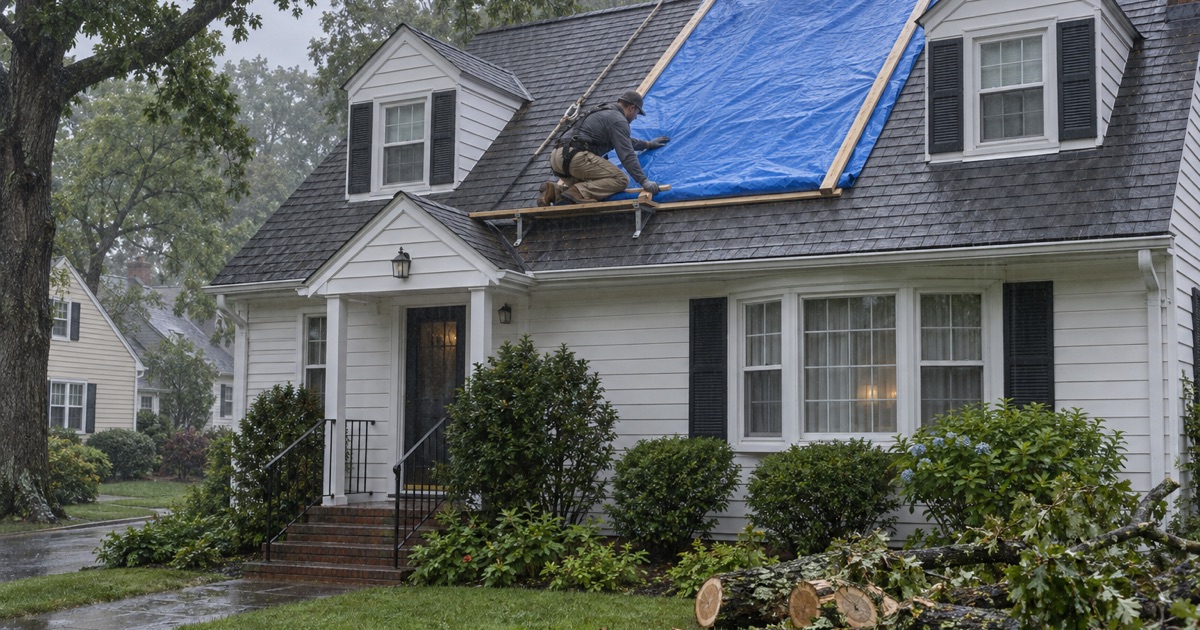
Parsippany Elite Roofing handles emergency roof repair in Parsippany, NJ and has worked on roofs across the area for more than 20 years, serving surrounding cities including Hanover, East Hanover, Denville, Florham Park and West Caldwell. When a storm tears shingles away, a limb punches through the roof, or water starts coming through a ceiling, the first job is stopping more water from getting in. We set tarps and make temporary repairs the same day whenever conditions allow.
An emergency repair has two stages. The first protects the house right away, and the second is the permanent fix that follows once the weather clears and the damage is fully understood. Rushing the permanent repair in the rain rarely ends well, so we keep the two stages separate and explain each one.
Throughout the process, we document what we find. Photos are taken before anything is moved, and you receive written notes describing the damage and the temporary work. That record matters if you decide to file an insurance claim.
What Happens on an Emergency Call
Assessing Safety First
Before anyone climbs a ladder, we look for downed wires, hanging limbs and sagging sections of roof. A storm-damaged roof can have weakened decking or broken rafters that are not visible from the ground. If the utility or a tree service needs to clear the area first, we tell you and coordinate with them.
Inside the house, we check ceilings for bulges, look at the attic and identify where water is entering. That inside view tells us where the temporary repair needs to go. It also helps you decide which rooms to keep clear until the roof is secured.
Photos Before Anything Moves
We photograph the damage from the ground, the roof and the attic before any tarp goes down or debris is cleared. Those images show the condition of the roof as the storm left it. Once a tarp is on, that evidence is much harder to capture.
The photos and our written notes go to you. They describe what was damaged, what we did, and what the permanent repair is likely to involve. They are your record to use with your insurer.
Tarping and Temporary Repairs
Where a section of roof is open, we install a heavy-duty tarp anchored with battens so the wind cannot lift it. The tarp extends over the ridge where possible, so water cannot run underneath from above. Smaller openings, such as a lost section of shingles or torn flashing, may be closed with temporary shingles or membrane instead.
These measures are meant to keep the house dry until the permanent repair. They are not a long-term fix. We schedule the follow-up repair as soon as the weather and any insurance inspection allow.
Common Roof Emergencies in the Area
Wind Storms and Lifted Shingles
Strong wind from summer thunderstorms and winter nor’easters lifts shingles along ridges, rakes and the upper edges of slopes. Once the seal strip breaks, the next gust can tear shingles away completely. Exposed underlayment can hold off rain briefly, but not for long.
We replace or temporarily secure the lost shingles and check the rest of the roof for broken seals. Shingles that lifted without tearing off can still leak in the next storm. Catching them early prevents a second emergency.
Fallen Trees and Limbs
Many homes in Morris County and nearby areas sit under mature trees, and storms bring down limbs that can puncture decking or crack rafters. Once the tree service has removed the weight, we can assess the damage and cover the opening. Structural damage to rafters or trusses may require additional repairs before the roof is rebuilt.
We photograph the damage at every stage. Fallen trees are a common source of insurance claims, and clear documentation helps the process go smoothly. We will meet your adjuster on site when you ask.
Ice Dams and Sudden Winter Leaks
In winter, ice dams along the eaves can push meltwater under the shingles and into walls and ceilings. These leaks often appear suddenly during a thaw. We can clear channels in the ice to let the water drain and stop the leak temporarily.
The lasting fix involves repairing the eave with ice and water barrier and correcting the attic ventilation that caused the melt. That work usually waits for milder weather. We explain the plan so you know what comes next.
After the Emergency
The Permanent Repair
Once the house is protected and the weather clears, we return to make the permanent repair. That may mean replacing decking, rebuilding flashing, installing new underlayment and shingles, or in some cases replacing a whole section of roof. The written scope lists each item so you know exactly what is included.
Any damaged decking found during the repair is photographed and shown to you before it is replaced. The price per sheet is set in the contract. There are no surprise charges once work begins.
Working With Your Insurance Claim
The insurance claim belongs to you, and your policy decides what is covered. Our role is to give you accurate evidence: photos, written notes and an itemized scope for the repair. If you ask, we meet the adjuster on site and walk through what we found.
New Jersey’s Department of Banking and Insurance publishes guidance for homeowners filing storm claims. It is worth reading before you speak with the insurer. We do not act as public adjusters or negotiate claims on your behalf.
Is It Time to Replace the Roof?
Sometimes a storm reveals that the roof was already near the end of its life. Brittle shingles, widespread granule loss and soft decking show up clearly once a section is opened. In that case, we tell you plainly whether a repair or a replacement makes more sense.
The decision is yours, and we give you the information to make it. A sound roof gets a repair, not a sales pitch. An aging roof gets an honest explanation of what to expect.
- 20+ Years on Local Roofs
- Itemized Written Scopes
- Same-Day Storm Tarping