
Parsippany Elite Roofing has handled gutter installation in Parsippany, NJ for more than 20 years, serving surrounding cities including Hanover, East Hanover, Denville, Florham Park and West Caldwell. A gutter system is the last part of the roof, not an accessory bolted onto the house. When it is sized, pitched and attached correctly, it carries water off the roof and away from the foundation instead of letting it soak the fascia, siding and basement walls.
Most gutter problems we see come from the same handful of causes. Gutters are too small for the roof area above them, there are too few leaders, the pitch runs the wrong way, or the hangers have loosened from soft fascia boards. On wooded lots, leaves and needles make every one of those problems worse.
Our estimates list gutters and leaders as separate lines from the roof, so you can replace them on their own or alongside a new roof. You see the profile, the number of leaders, the hanger type and any fascia repair included. That makes it easy to compare quotes item by item.
Seamless Aluminum Gutters and Leaders
Formed on Site to Fit the House
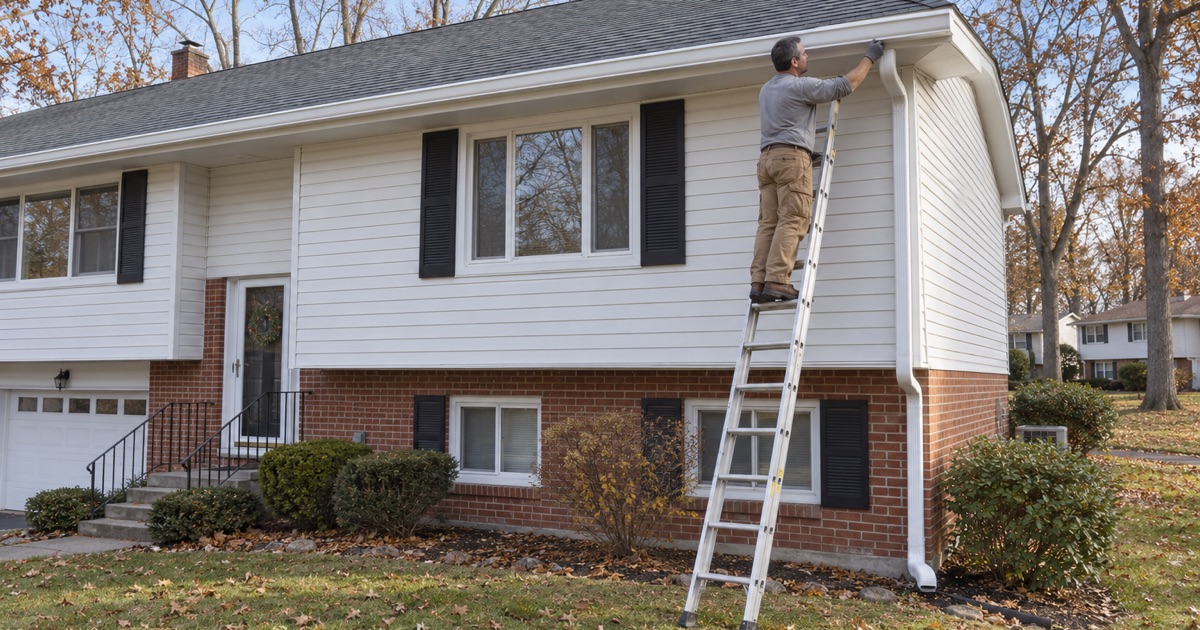
We install seamless aluminum gutters formed from coil on a machine at your property. Each straight run is one continuous piece cut to the exact length of the roof edge. With no seams along the run, there are far fewer joints to open up and leak over time.
Corners are mitered and sealed, and end caps are fastened and sealed as well. Aluminum does not rust, holds its painted finish well and is light enough to hang securely on a sound fascia. A range of colors lets the gutters match the trim or blend with the siding.
Sizing Gutters to the Roof
Gutter size should follow the roof area and pitch that drain into it, not simply whatever was there before. A steep roof sheds water faster, and a large slope draining into one run can overwhelm a small gutter in a heavy storm. We measure each section and choose the gutter profile that can handle it.
Where valleys concentrate water into one corner, an oversized gutter or a diverter keeps water from shooting past the edge. Larger leaders carry more water and clog less often. These choices are written into the scope so you can see why each was made.
Leaders, Elbows and Discharge
Leaders, also called downspouts, need to be placed where they can drain the gutter efficiently and discharge water safely. Long runs need more than one leader, and each should empty onto ground that slopes away from the house. Discharging beside the foundation is one of the most common causes of damp basements.
We plan leader locations around walkways, driveways and landscaping. Extensions or splash blocks carry water clear of the foundation. Where an existing underground drain is in place, we connect to it and check that it flows.
Installation Details That Make Gutters Last
Pitch Toward Every Leader
A gutter must slope slightly toward its leaders so water does not sit in the trough. Standing water adds weight, feeds algae and freezes in winter, pulling gutters away from the house. We set the pitch with a string line and check it before the final fasteners go in.
On long runs, the gutter is often pitched from the middle toward a leader at each end. That keeps the drop at each end small enough to look straight from the ground. It also shortens the distance water has to travel during a downpour.
Hidden Hangers and Solid Fascia
We use hidden hangers screwed through the gutter into the fascia and rafter tails, spaced closely enough to carry snow and ice. Screws hold far better than the spikes common on older installations, which work loose with every freeze and thaw. A securely hung gutter keeps its pitch for years.
Before anything is hung, we check the fascia boards. Soft or rotted sections are replaced, because no fastener holds in decayed wood. On homes built before 1978, painted fascia and trim are handled under the EPA lead-safe rule.
Drip Edge and the Roof Connection
The drip edge at the roof’s eave should direct water into the gutter, not behind it. When the drip edge is missing or the gutter sits too low, water runs down the fascia and into the soffit. We check this connection and add or adjust drip edge as needed.
When gutters are installed alongside a new roof, the drip edge and gutter are fitted together. That is the cleanest way to get the detail right. On existing roofs, we work carefully under the first row of shingles to avoid breaking their seal.
Gutters for Wooded and Lakeside Lots
Handling Leaves and Needles
Many homes across Morris County sit under mature oaks, maples and pines. Leaves fill gutters and leaders every fall, and needles collect year round. Clogged gutters overflow, freeze solid in winter and can contribute to ice dams along the eaves.
Larger leaders and well-placed outlets help debris pass through instead of jamming at the elbow. Where cleaning is a constant chore, gutter guards are an option worth discussing. We explain how different guard styles handle leaves, needles and seed pods before you choose.
Gutter Guards and Their Limits
Guards reduce the amount of debris that reaches the trough, but none are maintenance-free. Some styles shed leaves well but trap pine needles on top, while others need occasional brushing to stay clear. We match the guard to the trees that actually drop debris on your roof.
Guards also have to work with the roof. Some types slide under the first row of shingles, which can affect the roof warranty or break the shingle seal. We choose designs that protect the gutter without compromising the roof above it.
Snow, Ice and Winter Loads
Northern New Jersey winters put heavy loads on gutters. Snow sliding off the roof, ice building up in the trough, and icicles hanging from the edge all pull on the hangers. Close hanger spacing and screws into solid wood help the system carry that weight.
If ice dams are a recurring problem, the cause is usually in the attic rather than the gutter. Heat escaping into the attic melts snow that refreezes at the eave. We check ventilation and insulation as part of the conversation, because better gutters alone will not stop ice dams.
Our Step-by-Step Gutter Installation Process
Step 1: Measure and Plan
We measure each roof edge, note the roof area draining into it and mark where leaders can discharge safely. Fascia condition is checked along every run. The plan and price are written as separate gutter and leader lines.
Step 2: Remove Old Gutters and Repair Fascia
The old gutters and leaders come down and are hauled away. Any rotted fascia is replaced before new work begins. Drip edge is checked and corrected where needed.
Step 3: Form and Hang the New System
Seamless runs are formed on site, cut to length and hung on hidden hangers with the correct pitch. Corners and end caps are sealed. Leaders and extensions are installed and checked for flow.
Step 4: Test and Clean Up
We run water through the system to confirm it drains to every leader. The yard and driveway are cleaned, including a magnetic sweep for any loose fasteners or nails. You get a walkthrough of the finished system before we leave.
- 20+ Years on Local Roofs
- Itemized Written Scopes
- Same-Day Storm Tarping